
Members of project team
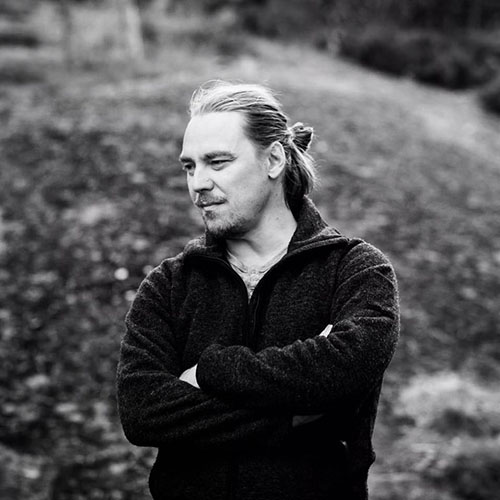
Jari Mustonen
Jari Mustonen is 3DBear’s Chief Technology Officer, bringing a rare combination of serial entrepreneurship, software engineering leadership, and academic backgrounds in both psychology and physics. At 3DBear, Jari focuses on building agentic AI systems and XR tools for educational content production. His work directly shapes how teachers and students interact with the Simuna platform, enabling faster content creation, intelligent automation, and consistent learning materials. In the NEXR project, Jari contributes technical expertise in XR/AI tools and LLM training for educational applications.
Email: jari@3dbear.fi
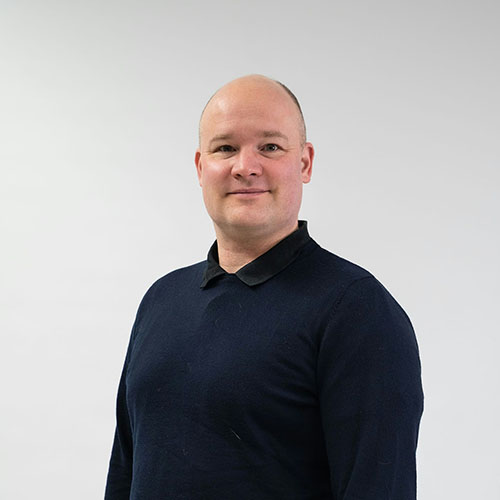
Jussi Kajala
Jussi Kajala is the CEO of 3DBear and leads the company’s participation in the NEXR project. He holds a PhD in physics (computational methods), with research in singular value decomposition and parallel computing — the same mathematical foundations that underpin modern AI models. Jussi oversees 3DBear’s technical architecture and AI/VR platform strategy, and has led the development of the Simuna learning platform from its inception.
He brings extensive experience in educational technology, immersive learning design, and cross-border project collaboration.
Email: jussi@3dbear.fi

Martin Morandell
MSc works as scientific employee at the Institute InnTra. For more than 25 years he is active in academic research, teaching and applying technology for people with disabilities and older adults, accessibility as well as themes related to digitalisation within the healthcare domain. As member of the e-learning team, Martin is in active exchange with other innovation leads within his home institution.
Ursula Costa
Prof. Ursula Costa, PhD, MA, is head of the Institute of Innovation, Sustainability, and Transformation in Health Care and Social Systems at the Health University of Applied Sciences Tyrol, Austria. During the past 25 years, she has been involved in curriculum development on institutional, regional, national, and European level, integrating service provision, research & development, and education. As lecturer, researcher, and responsible for Occupational Therapy and Occupational Science programmes at the Health University of Applied Sciences Tyrol, curricular implementation of skills labs and fieldwork student experiences as well as participatory research and development projects, involving users as experts for desired developments, aims, and corresponding approaches, have always been of great importance to her.

Camila Diaz
Camila Díaz is a BSc graduate in Biology from the University of Granada, with a background in environmental studies, sustainability and experience in European projects, as well as a solid understanding of biological, chemical and ecological processes. From 2022 to 2025, she collaborated as a research assistant in the universities of Granada (Spain) and Graz (Austria), in the Genetics, Biochemistry, and Biology departments, carrying out experimental and analytical laboratory work, supporting data and statistical analysis and contributing to scientific documentation within international research teams. She has also participated in EU-funded environmental and educational initiatives, combining research work with field activities and project support tasks.
At Skills Divers, she contributes to the development and implementation of initiatives funded by the European Commission (Erasmus+), bringing a strong scientific and research foundation together with competencies in digital technologies, e-learning and technical documentation in international environments. She also complements her experience with a strong creative capacity that promotes innovative thinking and the development of more efficient, solution-oriented workflows. Her work is driven by a strong commitment to generating positive environmental, digital and social impact, with a clear concern for today’s sustainability challenges.
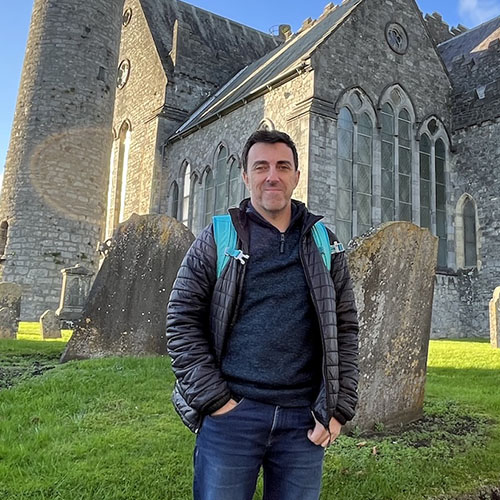
Joaquin Rios
ICT and Computer Science teacher and school leader with over 20 years of experience in integrating technology in education, academic management and leading innovation projects in the Region of Murcia.
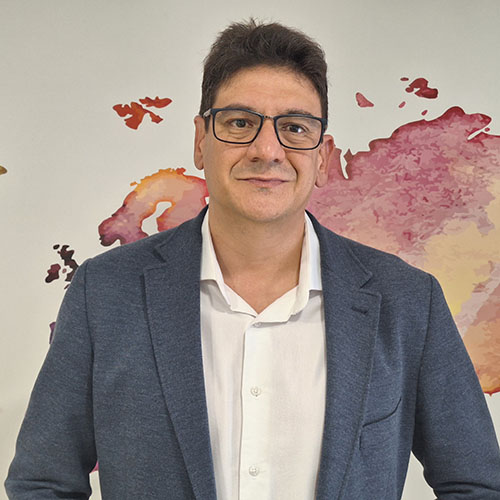
Gregorio Canavate
Gregorio Cañavate Cruzado (PhD) is an innovation manager and European project consultant with over 13 years of experience in the design, coordination, and execution of EU-funded initiatives. As General Manager of Skills Divers, he specializes in vocational excellence , digital transformation, and technologies for gamification of the learning processes.
He has contributed to numerous European R&D and training programmes, supporting consortia in proposal development, project coordination, and the delivery of impactful results across sectors. His work places a strong emphasis on skills development and innovation ecosystems aligned with EU priorities.
Gregorio also brings experience in e-health and digital health innovation, applying emerging technologies to improve training, service delivery, and user-centered solutions within healthcare contexts. His multidisciplinary background bridges engineering, education, and applied research, enabling the development of scalable and high-impact European projects.
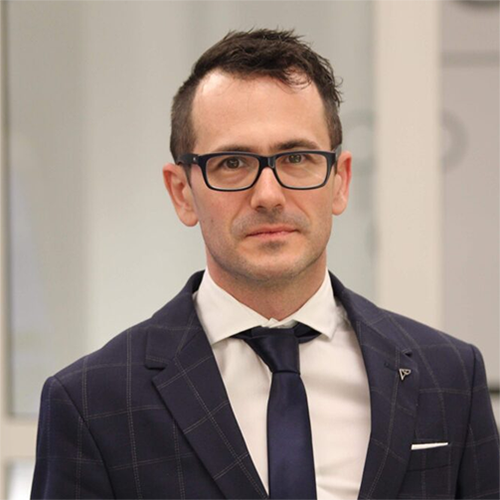
Adriano Friganovic
Adriano Friganovic was born 14 November 1978 in Banja Luka, Bosnia and Herzegovina. Works at University Hospital Centre Zagreb at Department of Quality Assurance and Improvement. Has worked as a head nurse of Department of Anaesthesiology and Intensive Medicine since 2016 to 2024. Also, has worked in the Division of Anaesthesiology and Intensive care of cardiac surgery patients since 1997., and from 2005 has worked as a head nurse until 2016. He graduated bachelor and master degree in nursing at University of Applied Health Sciences in Zagreb, Croatia and has PhD at Medical Faculty University of Ljubljana, Slovenia. Works as college professor at University of Applied Health Sciences Zagreb. He is assistant professor at Faculty of Applied Health Sciences Rijeka.
Adriano is an acting president of Croatian Nurses Society of Anaesthesia, Reanimation, Intensive Care and Transfusion, president of Croatian National Nurses Federation, president of European Specialist Nurses Organizations, Director for Research and Development of World Federation of Critical Care Nurses, president of Alumni of University of Applied Health Sciences, and chair of Congress Planning Committe of International Federation of Nurse Anaesthetics. He established a national online journal Shock and was a inaugural editor in chief. Adriano is Editor in chief of journal World of Health. He is also an editorial board member for several other journals. He established Sustainable Health Equity Movement and was a member of Steering committee. He is founding member of Alpha Alpha Ghama chapter Sigma Theta Tau International.
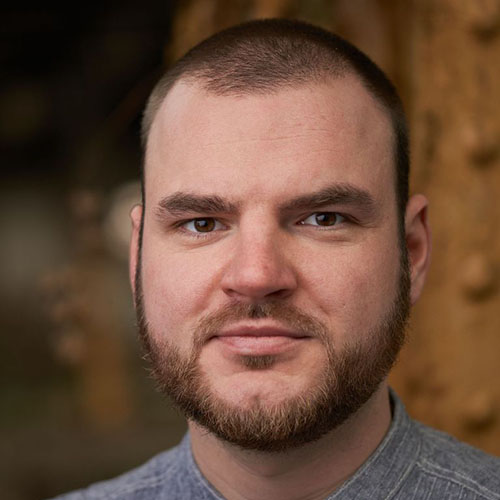
Tim Volkmnann
Since 2022, Tim has been working as a researcher at Otto von Guericke University Magdeburg. His
work focuses on international vocational education, digital educational tools, and project coordination. Has have experience in developing and implementing collaborative international projects in the field of education and digital learning. Tim served as project coordinator for the successfully completed Erasmus+ project BitTheSpectrum and is currently coordinating the Erasmus+ project NEXR, contributing to innovative approaches in digital and vocational education.
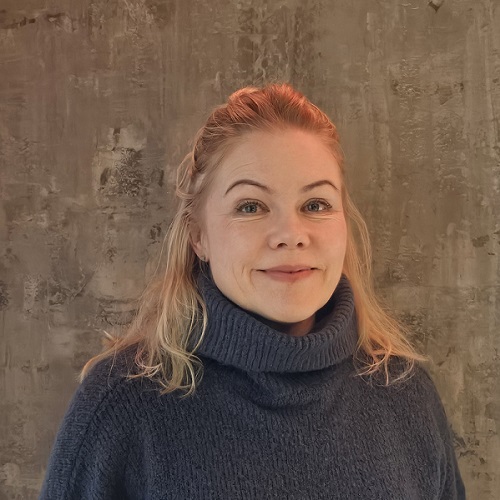
Laura Laakkonen
Laura Laakkonen is 3DBear’s Education and Curriculum Specialist, bringing extensive experience in nursing education and vocational pedagogy. A registered nurse with a Master’s degree in Health Sciences, Laura has worked as a lecturer in nursing programmes at Lahti University of Applied Sciences and Koulutuskeskus Salpaus, and as a pedagogical specialist at Suomen Diakoniaopisto. At 3DBear, Laura designs and develops digital learning materials for the Simuna vocational education platform. In the NEXR project, Laura contributes her expertise in nursing education curricula, pedagogy, and instructional design for XR-based healthcare training.
Email: lauramaria@3dbear.fi
Dr. Hannes Tegelbeckers
Hannes Tegelbeckers is a researcher and educator at Otto von Guericke University Magdeburg, Faculty of Humanities, Institute I: Education, Profession, and Media. Since 2017, he has been part of the Chair for Engineering Education and Didactics of Technical Education, where he currently works as a scientific assistant and PhD candidate. His research focuses on digitalization in education, particularly the development of digital and AI competencies in teacher education and Technical and Vocational Education and Training (TVET).
Hannes combines academic research with practical applications of technology in learning environments, emphasizing computational thinking, open educational resources (OER), and the pedagogical use of AI. He has contributed to national and international projects, including investMINT/CoSiTo and collaborations with the University of Chicago and Tiflis State University in Georgia, promoting digital literacy and affordable computing technologies such as Raspberry Pi in schools and development contexts.
He regularly lectures on AI in Education and Technology-Based Didactics, and serves as coordinator for international projects for the Chair and within the UNESCO-UNEVOC Centre Magdeburg for Sustainable Development in TVET. His broader expertise lies at the intersection of educational innovation, digital transformation, and global cooperation in teacher training.
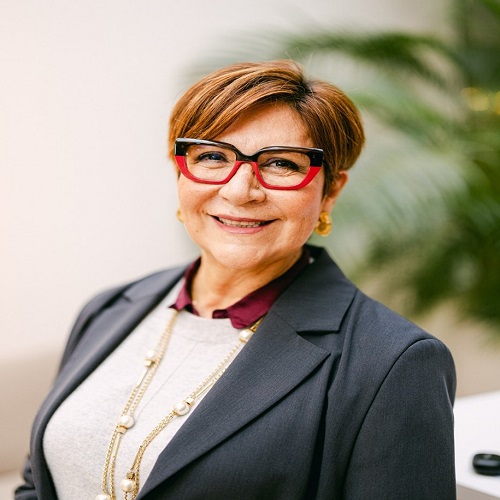
J.Patricia Burga
J. Patricia Burga started nursing education in Peru before moving to Washington, DC., where she practiced as a Registered Nurse. Subsequently, she was relocated to Italy, where she continued studies and advanced career, specializing in Infection Control, Gastroenterology, and Endoscopy Nursing. As the former General Secretary of SIGNEA (Society International of Gastroenterology Endoscopy and Associates), she was instrumental in establishing new Nursing groups in Argentina, Mexico, and Peru. Following this, she served as the President of the Italian Nursing Society of Gastroenterology and Endoscopy (ANOTE), a role that allowed her to gain extensive leadership experience and build strong collaborations with international colleagues.
Her active involvement in global nursing societies has enabled me, to develop a broad professional network, foster cultural exchange, and promote scientific growth. These experiences have shaped her into a professional committed to advancing nursing practice
worldwide.